
21 Jan
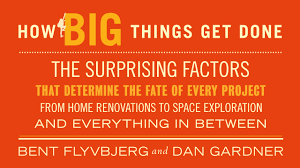
I recently read How Big Things Get Done by Prof. Bent Flyvbjerg & Dan Gardner — a powerful book for anyone in project management. Drawing from thousands of projects, it shows a clear pattern: most megaprojects go over time, over budget, and under-deliver — unless they are planned with discipline, clarity, and strategic foresight.
(Examples: California High-Speed Rail, The Great Belt Project, Denmark)
Key principles that stood out:
🔹 Plan slow, act fast — invest upfront in clarity and risk.
🔹 Think right-to-left — start with the end and work backwards.
🔹 Anticipate uncertainty — don’t be surprised by the unknown.
🔹 Reference class forecasting
India’s goal of becoming a developed nation by 2047 depends on today’s capital programmes — Gati Shakti, NIP, Sagarmala, rail modernization, smart cities, and energy transition. These are not just projects; they are nation-building programmes.
Yet, we face recurring challenges:
-Land & regulatory delays
-Poor DPR quality leading to scope creep (Think fast-act slow)
-Optimism bias in cost and time
-Multi-stakeholder coordination
-Skill gaps in planning and execution
To reach India@2047, we must move beyond speed and build with precision, realism, and discipline. World-class project management is no longer support—it is a strategic capability.
We should have a robust public database on these projects to share the good practices, lessons learned, time & cost overruns, benefits realized to ensure our natural resources are utilized wisely.

Refercences
Article written by Sachin Joy 20th January 2026
https://www.linkedin.com/posts/sachin-joy-inb_i-recently-read-how-big-things-get-done-by-activity-7418233092168970240-Z_wW?utm_medium=ios_app&rcm=ACoAABiHtWgBbmKPJ5t4TKUBa1M8AUOriv-2W6c&utm_source=social_share_send&utm_campaign=mail